
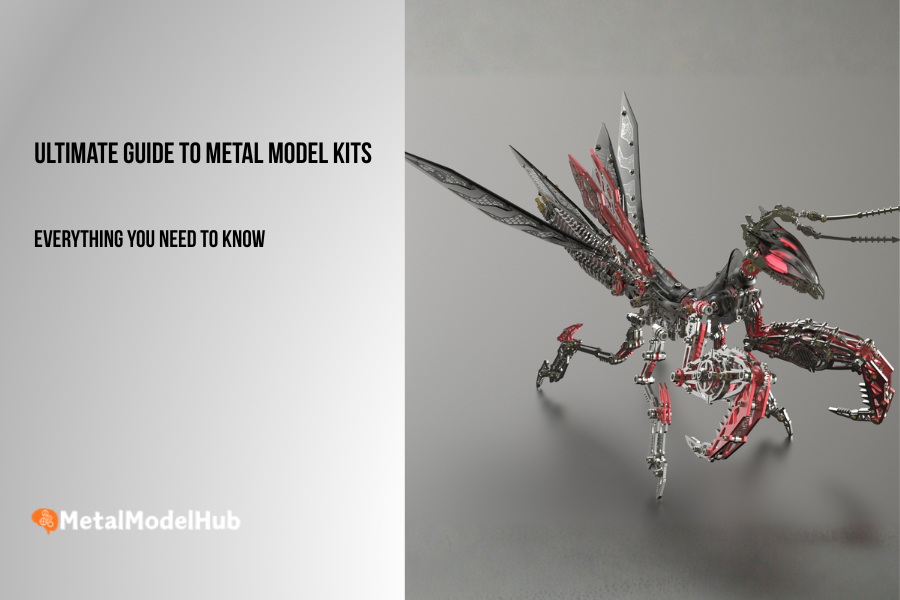
Ultimate Guide to Metal Model Kits: Everything You Need to Know
Introduction
When people first hear about someone spending several evenings snipping and folding metal sheets into a steel scorpion or a miniature engine, it can sound like a niche hobby. But once you see the process, it becomes clear why metal model kits are attracting more adults: they offer a hands-on creative escape from screens and everyday routines.
In this guide, we’ll cover what metal model kits are, the main types, how to build them, tools you’ll need, and how to choose your first kit.
What Are Metal Model Kits?
Metal model kits are DIY 3D models made from precision-cut metal parts that builders assemble by cutting, bending, and connecting pieces into detailed sculptures or mechanical creations. Unlike plastic models, they focus on hands-on craftsmanship and engineering-inspired assembly.
Most kits use stainless steel, brass, or alloy sheets, with parts connected by tabs, screws, or interlocking joints — usually without glue. They’re especially popular with adults who want a challenging, display-worthy hobby project.
Benefits of Building Metal Model Kits for Adults
If you already know what metal model kits are, you’re probably wondering whether they’re worth the investment of time and money.
Hands‑on satisfaction
From the first snip to the final fold, every step in a metal model kit gives you immediate, tactile feedback. You aren’t just clicking pieces together — you’re shaping metal with your own fingers and watching a flat sheet transform into a recognizable sculpture. That feeling of physically building something real is difficult to find in other hobbies.
Engineering and creativity combined
Metal models sit at a rare intersection of art and mechanics. You get the precision of an engineering project — aligning tabs, adjusting gears — combined with the creative freedom to polish, paint, or customize details. For anyone who enjoys both building and designing, this blend is uniquely satisfying.
A true escape from screens
Building a metal kit demands focus in the best way: your hands stay busy, your mind stays on the next step, and screens fade into the background. It’s meditative, productive, and perfect for unwinding after a long day.
Beautiful collectibles
A finished metal model isn’t something you hide in a drawer. Whether it’s a matte‑steel beetle or a polished brass engine, the material itself gives the piece a weight and shine that plastic can’t match. These models are designed to be displayed, starting conversations and adding personality to any shelf or desk.
A hobby that grows with you
You can begin with a simple 3D metal puzzle that takes an afternoon, and over time advance to complex mechanical kits with moving parts and dozens of hours of assembly. The skills you build — precision, patience, spatial reasoning — stick with you, and each completed model pushes your ability a little further. That built‑in progression keeps the hobby fresh for years.
What Comes Inside a Metal Model Kit?
When you open a metal model kit for the first time, you’re usually greeted by a few flat sheets of laser‑cut metal, a small bag of connectors, and a folded instruction booklet. That’s really all it takes to get started. Most kits include:
- Metal sheets (or pre‑cut parts): Typically stainless steel, brass, or alloy, with pieces held in place by tiny tabs.
- Assembly instructions: Often in exploded‑view diagrams, much like an engineering drawing.
- Basic tools: Usually included in beginner kits — tweezers, snippers, a small file, and sometimes needle‑nose pliers.
- Connectors: Tiny screws, rivets, or interlocking tabs that hold everything together without glue.
Types of Metal Model Kits
Metal model kits come in different styles, but most fall into two main categories: 3D metal puzzles and mechanical metal model kits. While both types use precision-cut metal parts and provide a hands-on building experience, they offer very different creative journeys.
3D metal puzzles focus on detailed craftsmanship and decorative design, while mechanical metal model kits add moving parts and engineering-inspired structures. Understanding the difference will help you choose a project that matches your interests, experience level, and expectations.
1. 3D Metal Puzzles
These are the type most people picture when they hear “metal model.” You start with flat metal sheets, carefully detach the pieces, and then bend and slot them together — no glue needed. The finished models are mostly decorative, designed to look impressive on a desk or shelf. Think of them as intricate sculptures: a tiny dragon, a butterfly, a detailed insect. Because the assembly relies on folding and interlocking, the process feels like solving a puzzle, and the result has a light, elegant look.
2. Mechanical Metal Model Kits
These kits take things up a notch. Instead of static decoration, you’re building something that moves. Gears, axles, linkages — the parts come together to create working mechanisms. A mechanical dinosaur head might open its jaws, a clockwork spider might walk, or an engine model might actually run. The focus here is on engineering design, and the assembly requires more attention to alignment and moving parts. It’s immensely satisfying to see your creation come to life.
Ready for the challenge? Browse our Mechanical Model Kits section to see what’s available.
Both types share the same core appeal: using your hands to turn flat metal into something that feels alive. The only real question is whether you want a beautiful static piece or a device that moves.
How Do Metal Model Kits Work?
Metal model kits may look complicated when you first open the box, but the building process follows a clear series of steps. From separating the metal parts to completing the final details, each stage transforms flat sheets or individual components into a finished 3D model.
Preparing the Parts
Before you touch a tool, lay out your parts and match each numbered piece to the diagram. Experienced builders spend a few minutes checking the parts list first — especially when several pieces look similar. A clear workspace makes the rest of the build much smoother.
Removing and Shaping Metal Parts
This is where the unique experience of metal modeling begins. Using flush cutters or snips, you carefully detach the parts from the sheet, then file or sand away the small tabs left behind.
Once each piece is cleaned, the real craftsmanship starts. You begin bending metal model parts with pliers or your fingers to match the curves and angles shown in the instructions. A flat piece of metal slowly becomes a wing, a leg, a gear bracket, or another recognizable component.
This hands-on metal model assembly process is what makes the hobby different from simply putting pieces together. Every bend and connection requires attention, turning the build into a creative activity that combines patience, precision, and skill.
Connecting the Components
How the pieces come together depends on the type of metal model kit you choose.
3D metal puzzles rely mainly on tabs and slots. You bend a small tab, insert it into a matching opening, and secure the connection by folding or twisting the metal into place. No glue is needed, and the connection points often become part of the model’s detailed appearance.
Browse our 3D Metal Puzzles collection for examples.
Mechanical metal model kits take the building process further by adding moving components. Instead of only connecting static parts, you work with screws, axles, gears, and linkages. Each component needs to be positioned correctly so the finished mechanism can move smoothly.
Explore our Mechanical Model Kits to see how these designs come to life.
Either way, this is the stage where separate pieces begin working together. The structure of your model gradually rises from the work surface, and you can start seeing the final creation take shape.
Adjusting and Testing Moving Parts
For mechanical metal model kits, this testing stage is an important part of the building process.
Before tightening every screw and completing the model, you’ll gently test the moving sections — spinning gears, checking linkages, or moving pistons — to make sure everything operates correctly. Sometimes a small adjustment is needed, such as slightly repositioning an axle or loosening a connection that is too tight.
On an animal-inspired model, this may involve checking that the wings move properly or the jaws open smoothly. On an engine model, you may test whether the pistons and gears work as intended.
This process not only improves the final result but also gives builders a better understanding of how mechanical structures work.
Completing the Final Details
Once all parts are assembled and moving correctly, it’s time for the finishing touches. You may polish the surface, remove fingerprints, or straighten a slightly misaligned panel.
Some builders choose to add extra protection, such as a clear coating, to help maintain the appearance of the finished model over time.
Finally, the completed model moves from your workbench to its new home — whether that’s a desk, bookshelf, or display case. At this moment, a simple collection of metal pieces becomes a finished collectible created entirely by your own hands.
The magic of metal model kits comes from this transformation process. What starts as a collection of flat metal sheets and small components slowly becomes a detailed sculpture or working mechanism through patience, precision, and creativity.
Best Metal Model Kits for Different Interests
Many people don’t choose their first metal model based only on difficulty level — they choose a theme that connects with their personal interests. That’s one of the greatest advantages of metal model kits: they cover a wide range of designs, from mechanical creations and classic vehicles to animals and artistic display pieces. Whether you are fascinated by gears and engineering or prefer detailed sculptures inspired by nature, there is a metal model kit that matches your style.
For Mechanical and Engineering Enthusiasts
If you enjoy understanding how things work, mechanical metal model kits are a natural choice. These builds focus on moving parts, gears, linkages, and engineering-inspired designs, often creating working engines or creatures with realistic motion. They combine the satisfaction of assembly with the curiosity of seeing a mechanism come to life.
→ Explore our Best Mechanical Metal Model Kits guide for detailed recommendations.
For Vehicle Lovers
Classic cars, motorcycles, ships, and aircraft all translate beautifully into metal model designs. Vehicle-themed kits allow you to recreate iconic transportation designs in miniature, often featuring details such as rotating wheels, propellers, or mechanical components. They are perfect for anyone who appreciates industrial design, engineering, and the history of machines.
→ See our Best Vehicle Metal Model Kits guide to find your next project.
For Animal and Nature Lovers
From detailed insects and dinosaurs to elegant wildlife sculptures, animal metal models bring the beauty of nature into your home. Many of these kits are designed as impressive display pieces, while some feature moving elements such as wings, tails, or jaws for an added sense of realism.
→ Browse our Best Animal Metal Model Kits guide for inspiration.
For Steampunk Fans
Steampunk metal models combine mechanical details, vintage aesthetics, and imaginative designs into a unique artistic style. Clockwork creatures, retro machines, and gear-filled creations feel like they belong in a Victorian science-fiction world, making them especially appealing to builders who love fantasy and industrial design.
→ Discover our Best Steampunk Metal Model Kits recommendations.
No matter what inspires you — engineering, nature, vehicles, steampunk design, or simply the joy of creating something unique — there is a metal model kit that fits your interests. Choosing a theme you genuinely enjoy is one of the best ways to make the building experience more enjoyable from the very first piece.
Tools Needed for Building Metal Model Kits
Building a metal model kit does not require a large collection of tools, but having the right equipment can make the assembly process easier and more enjoyable. Basic tools such as precision cutters, pliers, tweezers, and files help with removing parts, bending metal, and creating clean connections, while advanced builders may use additional tools for detailed adjustments.
Learn more about the essential tools for beginners and experienced builders in our complete guide: Tools Needed for Building Metal Model Kits.
How to Choose Your First Metal Model Kit
Once you understand why building metal models is such a rewarding hobby, the next practical question is: which metal model kit should you start with?
The answer is not simply about choosing the most popular or most impressive-looking model. The best first kit is the one that matches your experience level, interests, available time, budget, and the kind of project you enjoy.
For adults exploring metal model kits for the first time, choosing the right starting point can make the difference between a frustrating project and a hobby you want to continue for years. Consider these four factors before choosing your first build.
Choose by Difficulty Level
Difficulty is one of the most important factors when selecting your first metal model kit.
Beginners should look for kits designed with simpler assembly steps, fewer components, and clearer instructions. Many new builders find that smaller 3D metal puzzles are an excellent introduction because they usually focus on folding, bending, and connecting metal pieces without requiring complex mechanical adjustments.
If you enjoy a greater challenge, mechanical model kits can offer a more advanced experience. These kits often include gears, moving parts, and detailed structures that require more patience and precision. However, beginners who enjoy engineering and problem-solving may also enjoy starting with a simpler mechanical design.
The key is choosing a difficulty level that feels challenging but still enjoyable. A successful first build creates confidence and makes you excited to take on more complex projects.
Choose by Available Time
Before choosing a kit, consider how much time you realistically want to spend building.
Some smaller metal models can be completed in a few hours or over a relaxing weekend. These projects are ideal for casual builders who want a satisfying creative activity without a long commitment.
Larger mechanical models with hundreds of parts may require many evenings or even several weeks to complete. These builds are better suited for hobbyists who enjoy detailed craftsmanship and longer projects.
A good first kit should fit naturally into your schedule. If you only have short periods of free time, a smaller model can provide quicker progress and keep your motivation high.
Choose by Budget
Metal model kits are available at many different price levels, from affordable beginner projects to premium mechanical builds with complex structures.
For your first purchase, a smaller or mid-range kit can be a great way to experience the hobby and understand whether metal modeling is right for you. You can learn basic techniques without making a large investment.
More advanced models often cost more because they include additional parts, larger designs, moving mechanisms, and more detailed engineering. For experienced builders, the extra complexity can provide a deeper and more rewarding challenge.
The most expensive kit is not always the best choice. The right model is the one that provides the level of enjoyment, challenge, and satisfaction you are looking for.
Choose by Display Space
Before clicking the buy button, think about where your finished model will be displayed.
Some metal models are compact enough to sit on a desk, bookshelf, or small display cabinet. Others, especially large mechanical creatures or detailed engine models, can become impressive centerpiece decorations that require more dedicated space.
The style of the model also matters. A raw steel mechanical scorpion may fit perfectly in an industrial-style workspace, while a polished brass butterfly or elegant animal sculpture may look better in a modern home office.
Choosing a model that matches your available space and personal style ensures that you will continue enjoying it long after the assembly is complete.
Final Tip: Choose a Model You Will Enjoy Building
Your first metal model kit does not need to be the biggest, most expensive, or most complicated project available.
The best choice is the one that matches your interests, skill level, and lifestyle. Whether you prefer the artistic experience of 3D metal puzzles or the engineering challenge of mechanical model kits, the right project can turn simple pieces of metal into something truly meaningful.
A finished metal model is not just a decoration — it is a reminder of the time, patience, and creativity you invested in building something with your own hands.
Frequently Asked Questions
Are metal model kits suitable for beginners?
Yes, many metal model kits are designed for beginners. Smaller 3D metal puzzles usually have simpler structures, fewer parts, and easier assembly steps, making them a good starting point for people new to metal modeling.
For beginners, choosing a kit with clear instructions and a lower difficulty level can help build confidence before moving on to more complex mechanical models.
Are metal model kits difficult to build?
The difficulty of a metal model kit depends on its design, number of parts, and mechanical complexity.
Simple 3D metal puzzles may only require basic cutting, bending, and connecting, while advanced mechanical kits can involve gears, moving parts, and more precise assembly.
Choosing a kit that matches your experience level is the best way to enjoy the building process.
Do metal model kits require glue?
Most metal model kits do not require glue.
3D metal puzzles usually use tabs, slots, and folding connections to hold parts together. Mechanical metal models often use screws, connectors, and moving components to create a stable structure.
This glue-free assembly is one of the features that makes metal modeling different from traditional plastic models.
How long does it take to build a metal model kit?
The building time depends on the size and complexity of the model.
Small beginner kits can often be completed within a few hours, while larger mechanical models with hundreds of parts may take several days or even weeks.
The process is meant to be enjoyed slowly, allowing builders to focus on each step and appreciate the transformation from metal sheets to a finished model.
What tools are needed for metal model kits?
Basic metal model building usually requires only a few tools, such as precision cutters, tweezers, pliers, and files.
Some beginner kits include basic tools, while experienced builders may use additional equipment for detailed adjustments and cleaner finishes.
You can learn more about essential equipment in our complete guide: Tools Needed for Building Metal Model Kits.
Are metal model kits good gifts for adults?
Yes, metal model kits can make unique gifts for adults who enjoy creative hobbies, engineering, crafts, or collectible items.
Unlike many traditional gifts, a metal model provides both an enjoyable building experience and a finished piece that can be displayed at home or in an office.
They are especially popular among hobbyists, collectors, and people who enjoy hands-on projects.
Can children build metal model kits?
Many metal model kits are recommended for older children and adults, often with suggested ages around 14 and above.
Because some parts are small and assembly may require cutting or bending metal pieces, younger builders should have adult supervision and choose models designed for their skill level.
How should I maintain a finished metal model?
To keep a metal model looking its best, store it in a dry environment and clean it gently with a soft cloth to remove dust.
Avoid excessive moisture and direct exposure to harsh conditions, as some metal surfaces may develop oxidation or lose their original appearance over time.
Proper care can help your finished model remain an attractive collectible for years.
