
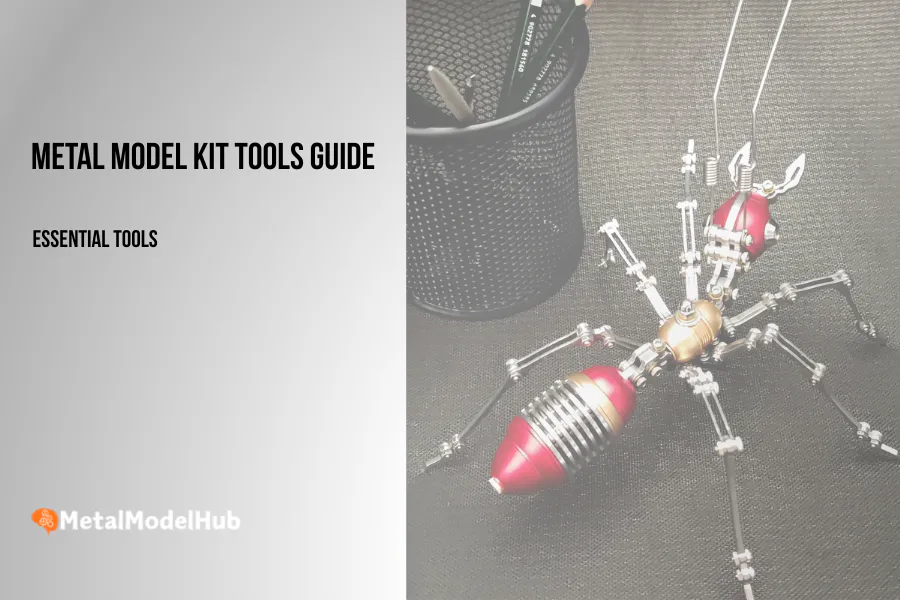
Metal Model Kit Tools Guide: Essential Tools for Building 3D Metal Puzzles
If you’ve ever built a metal model kit, you’ll know the experience depends a lot on the tools you use. Some kits are smooth and enjoyable, while others can quickly become frustrating without the right setup. The good news is you don’t need anything complicated—just a few essential tools can make a big difference in precision, comfort, and overall building experience. In this guide, we’ll go through the must-have tools for metal model kits and what actually matters when you start assembling your first 3D metal puzzle.
5 Essential basic tools
Fine-tip Nippers (Cutting Tool)
Used to cleanly cut metal parts from the sheet without bending or damaging them. It’s one of the most essential tools for precise assembly, especially for beginner kits.
Tweezers
Helps pick up and position small metal parts that are difficult to handle by hand. Essential for detailed and delicate assembly work.
Precision Screwdriver Set
Used for fine adjustments or tightening small parts when needed. More useful in advanced kits with mechanical structures.
Small Bending Tool
Used to fold and shape metal pieces accurately. It improves precision and helps create stable connections between parts.
Advanced tools for better experience
Magnifying Glass / Desk Lamp
Provides better visibility for tiny components. Helpful when working on detailed sections or in low-light environments.
Metal Sanding / Deburring Tool
Used to remove sharp edges or burrs after cutting metal parts. Improves safety and gives parts a cleaner fit.
Non-slip Mat
Keeps small parts from sliding or getting lost during assembly. Helps organize the workspace and improves focus.
Workbench / Stable Work Surface
Provides a solid and comfortable area for building models. A stable surface improves precision and reduces mistakes during assembly. At the same time, working for long periods in an unsupported or poorly designed setup may cause discomfort or strain, so a proper workspace also helps maintain better posture and overall comfort during extended building sessions.
Tools to Avoid
Regular Scissors
Not suitable for metal model kits. They can’t cut metal cleanly and may bend or damage the parts instead of producing precise cuts.
Nail Clippers
Too weak and imprecise for metal sheets. Using them often leads to uneven edges and can make assembly harder later.
Rough or Heavy-Duty Pliers (Non-precision)
Not designed for fine model work. They can easily scratch, deform, or crush delicate metal pieces instead of handling them accurately.
Unstable or Unsupported Work SurfaceWorking on an unstable surface can make small parts easier to lose and reduce precision during assembly. A stable workspace helps improve both accuracy and comfort.
Tools Suggested for Different Difficulty Levels
| Difficulty | Tools | Notes |
| Beginner | Nippers, Tweezers, Precision Screwdriver Set | Basic tools are enough for small and simple kits (10–200 pieces). |
| Intermediate | Nippers, Tweezers, Magnifying Glass / Desk Lamp, Bending Tool | More precision is needed as parts become smaller and more detailed. |
| Advanced | Full tool set (Nippers, Tweezers, Bending Tool), Metal Sanding / Deburring Tool, Non-slip Mat | Requires higher accuracy and longer assembly time. |
| Expert | Complete tool kit + stable workbench / workstation setup | Best suited for large and complex models with 1000+ parts. |
Most beginners only need basic tools, while more advanced kits require additional precision tools and a better workspace.
Conclusion
In the end, building metal model kits really isn’t about having a lot of tools—it’s more about having the right basic ones ready before you start. Once you’ve got that simple setup in place, the whole process becomes much smoother and more enjoyable. The good thing is, most metal model kits can be built with the same core tools, so you don’t need to keep buying new equipment for every project.
If you’re just starting out, choosing beginner-friendly metal model kits is the easiest way to get a smooth experience. Most beginner kits only require basic tools like nippers and tweezers, making them perfect for learning and getting comfortable with the building process.
FAQS
Start here →everything you need to build metal model kits.
