
What is a model kit? A Beginner’s Guide to Wooden, Plastic, and Metal Kits
A model kit is a set of pre-cut parts that you assemble to create a 3D replica of an object.But with so many types available, which one should you choose?This guide will break down the three main types and help you decide.
What is a model kit
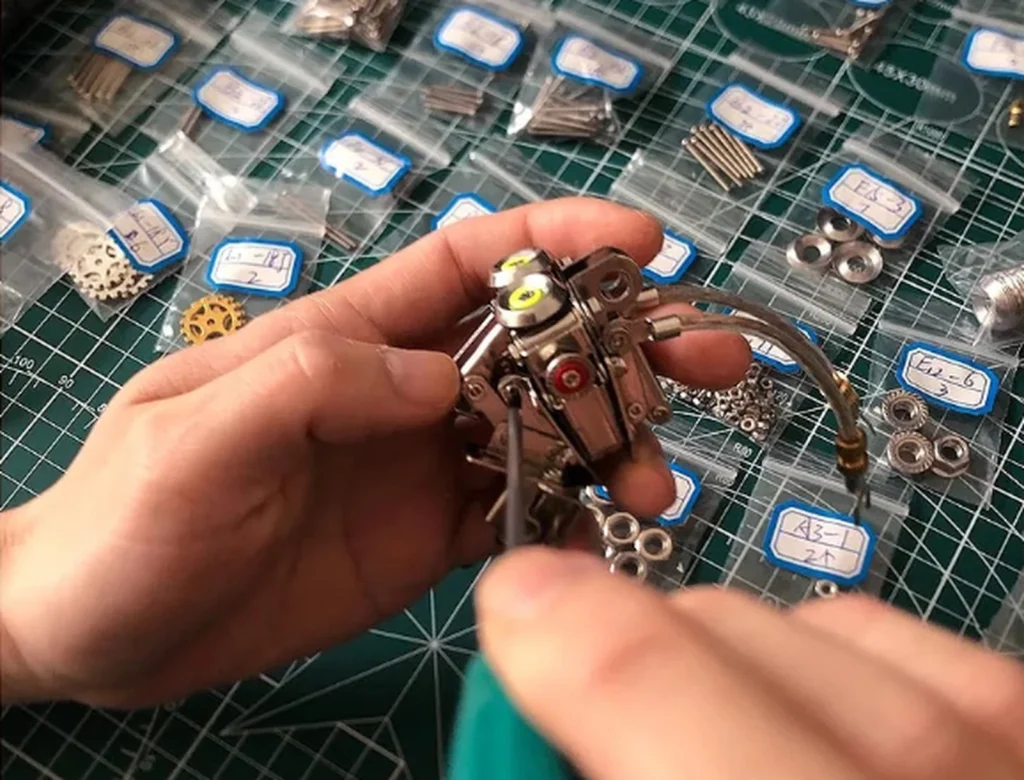
A Model Kit (also commonly referred to as an “assembly model” or “buildable model”) is a package containing a set of unassembled parts, an instruction manual, and possibly stickers or accessories.
Buyers need to use their hands-on skills and follow the instructions to cut, sand, snap together, or glue the parts one by one, ultimately recreating a miniature physical model (such as an aircraft, tank, Gundam, building, or car).
Types of Model Kits
Model kits come in various materials, each with its own pros and cons.
The table below compares the most common materials used in model kits, highlighting their key advantages and disadvantages.
Aspect | Plastic | Wood | Metal |
|---|---|---|---|
Assembly | Requires glue | Requires glue | Snap-fit, no glue |
Detail Level | ⭐⭐⭐⭐⭐ Excellent | ⭐⭐⭐Good | ⭐⭐⭐⭐ Very Good |
Durability | ⭐⭐⭐ Moderate | ⭐⭐⭐ Moderate | ⭐⭐⭐⭐⭐ Excellent |
Weight | Light | Medium | Heavy |
Painting | Easy | Moderate | Moderate |
Price | Low to Medium | Medium | Medium to High |
Best For | Beginners to experts | Natural texture lovers | Mechanical look lovers |
Why Choose a Metal Model Kit
Ultimate Precision & the Stress Relief of “Modern Industry”
Plastic (Gundam/Military Models): Primarily relies on assembling plastic parts to create a shape. Due to material limitations, plastic parts often have rounded edges. Without seam line removal, sanding, and painting, the finished product can feel like a cheap “plastic toy.”
Wood (Mechanical Transmission Models): Limited by wood fibers, parts cannot be made too small, otherwise they break easily. As a result, details tend to be rough and coarse.
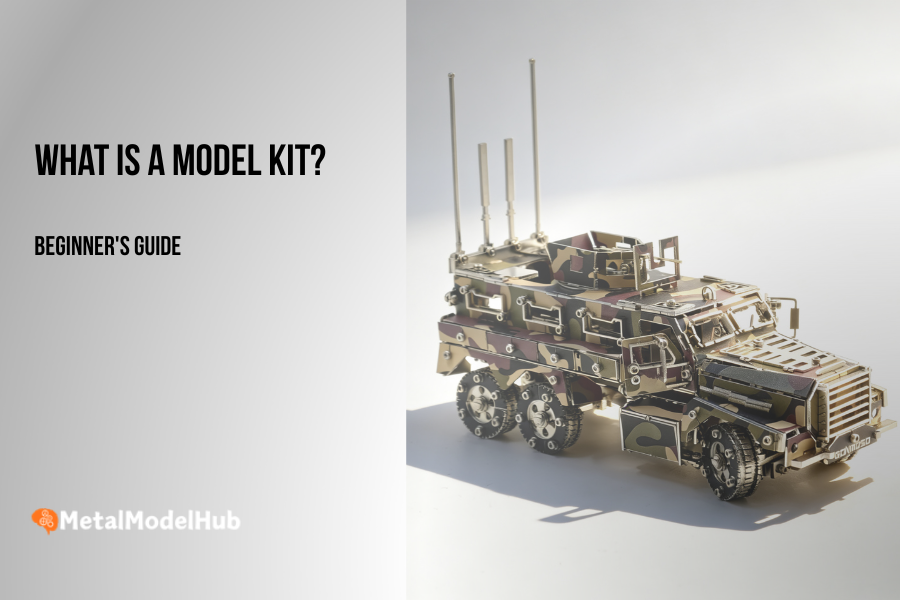
Metal: Utilizes laser micron-level etching technology (sharing the same aesthetic as chip manufacturing and precision machinery). On a model like this 6×6 armored vehicle, every anti-slip texture, every rivet less than 1mm, and even the radiator mesh are physically “real metal.”
When 581 stainless steel parts lock together seamlessly, the cold, sharp, and precise mechanical beauty delivers immense mental satisfaction to engineering-minded individuals, technical enthusiasts, or those with a touch of OCD.
A Heavy, “Value-Retaining” Feel (No Advanced Painting Skills Required)
There’s a famous saying in the plastic model community: “30% building, 70% painting.” The final quality of a plastic model depends entirely on your airbrush, compressor, masking tape skills, and toxic paints. A plain, unpainted plastic car model rarely looks premium on a desk.
Metal models come with an inherent material advantage.
Modern metal models use anodized or electroplated color finishes. When light hits the stainless steel or colored metallic paint, the unique metallic refraction, mirror-like reflection, and satisfying heft in your hand are sensations that plastic and wood can never replicate.
It requires no toxic paint inhalation. Once assembled, it naturally becomes a desktop ornament with the attributes of an industrial art piece. It inherently looks expensive.
Say Goodbye to “Cracking” and “Aging”: A Heirloom That Lasts
Wood fears humidity and dryness. It can easily mold and warp during rainy seasons, crack in heated indoor environments, and fall apart over time.
Plastic fears UV light. Even without painting, leaving it by a window for a few years will cause it to become brittle, yellow, oxidize, and “crumble.”
Metal (High-Grade Stainless Steel): Oxidation-resistant, corrosion-resistant, and rust-proof. Once you build a vehicle, as long as you don’t hit it with a hammer, it will remain a gleaming steel beast ten or twenty years later. This “eternal” quality gives your time and effort a perfect return.
Pure, Mechanical Feedback to Your Fingertips
Building plastic models requires nippers, hobby knives, sanding sticks, and glue. The process feels more like crafting a “handicraft.”
Building metal models, your tools are side cutters and pliers. Every action involves inserting a tiny metal tab into a slot, then twisting it 90 degrees or folding it flat.
Each time a metal lock clicks into place, the tactile “snap” and solid sense of security transmitted through your fingers is incredibly addictive.
There’s no waiting for glue to dry, no sticky fingers. It’s a purely mechanical process locked by structural engineering.
If you seek ultimate realism and historically accurate colors, plastic military models are for you.
If you seek classic mechanics and the healing scent of wood, wooden models are for you.
But if you seek precise mechanical structures, hardcore assembly challenges, the unique cold texture of metal, and that heavy, understated, tech-savvy luxury on your desk—then metal models will get you hooked, and you’ll never look at lightweight plastic the same way again.
How to Choose the Right Model Kit for You
- By Age
Kids (6–12): Choose wooden or large-piece metal kits. Avoid small parts.
Teens & Adults (12+): Metal kits with 100–500 pieces offer a good challenge. - By Skill Level
Beginner: 100–200 pieces, simple structure (e.g., animals, small vehicles).
Intermediate: 200–600 pieces, more details (e.g., cars, mecha).
Advanced: 600+ pieces, complex assembly (e.g., armored vehicles, buildings). - By Interest
Military fans: Plastic or metal tank/jeep models.
Fantasy lovers: Metal phoenix, dragon, or mythical creature kits.
Architecture buffs: Wooden or metal building models (Eiffel Tower, bridges).
Looking for your first metal model kit?
Explore our beginner-friendly collection of metal model kits. Every kit includes detailed instructions and premium stainless-steel parts to make your first build enjoyable.
Start here →everything you need to build metal model kits.
